Shocking and heartbreaking, Food, Inc. gives us those nitty-gritty details of how a tomato is grown or how a chicken is raised. It reveals that every step of the process from farm to factory to functional product is not as scrupulously regulated as government organizations like the USDA and the FDA would have you believe. According to Pollan, “the industrial food system is always looking for greater efficiency. But each new step in efficiency leads to problems.”
Agriculture
Movie Review: Food, Inc.
by Brenna E. Fitzgerald
June 18th, 2009
The Twin by Gerbrand Bakker
by Elinor Teele
May 27th, 2009
Deceptively plain in its phrasing, almost lethargic in its pace, The Twin is about as flat as the Dutch landscape in which it’s set. Yet lurking in the white spaces is something one can sense, if not pin down precisely. A moody sense of colors – of grey and blue – of silvery insights breaking through a dull day, and of moving between the modern world and a rural life untethered to minutes.
All the Living by C.E. Morgan
by Elinor Teele
April 7th, 2009
For All the Living is an excellent debut for Morgan, a bold book of small incidents and large emotions. It is the work of an author unafraid to wrestle with language and if, at times, language wins out, well then, it’s merely shaping her muscles for the next round.
What’s Killing the Honeybees?
by Paul Comstock
November 4th, 2008
“So the bigger conclusion is that we have soaked our landscape in toxic chemicals, many of which can interact to form even more toxic compounds, and there is absolutely no regulation or testing of this mixing. Most beekeepers and researchers I’ve spoken with believe pesticides are one factor, working in conjunction with introduced parasites, viruses, bacteria, and fungi, and quite possibly with deteriorating living conditions for bees. Bees could handle one or two of these stressors, but not all of them.”
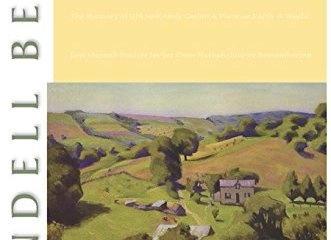
Hannah Coulter – by Wendell Berry
by Robert C. Cheeks
April 22nd, 2007
There was a time, not many decades ago, that most of America’s population labored on family farms. Then, the primary objective of the American farmer was to be debt free, to be independent. I was made aware of this “independence” many years ago when my mother-in-law, Jessie Hobbs, the daughter of a West Virginia farmer, once commented about her childhood, “We didn’t know there was a depression.”

CLR's most popular articles
- The Office Recap: Finale (Season 9, Episode 23) (1,647 views)
- Early Review: Don Jon (1,579 views)
- Oh, Those Crazy Modern Victorians: Or What the Heck Is Steampunk? (973 views)
- Mad Men Recap: "Man with a Plan" and "The Crash" (Season 6, Episodes 7 and 8) (672 views)
- Setting Fallout 4 Pt. 2 (of 2) - On The Road Again! (578 views)
- Setting Fallout 4 Part 1 (of 2) - How the West Was Fun (541 views)
- 100 Greatest Gangster Films: The Godfather, #1 (324 views)
- 100 Greatest Gangster Films: Pulp Fiction, #5 (318 views)
- Civil War 150 – A Readers’ Guide (Part 3) (304 views)
- The Paintings of Tom Palmore (295 views)
- Photo Essay: North Korean Propaganda Posters (194,623 views)
- The Help by Kathryn Stockett (175,502 views)
- Kick-Ass and the Hit-Girl debacle (81,016 views)
- The Guernsey Literary and Potato Peel Pie Society by Mary Ann Shaffer and Annie Barrows (75,556 views)
- Erotic Art of Ancient Pompeii (56,667 views)
- Video Game Review: Mass Effect 3 (55,314 views)
- Images from How To Photograph an Atomic Bomb (51,865 views)
- Frida Kahlo at the San Francisco Museum of Modern Art (44,496 views)
- The Strange World of Quantum Entanglement (37,902 views)
- Mad (wo)Men: The Complexity of Womanhood in "Mad Men" (37,626 views)
Get The Latest California Literary Review Updates Delivered Free To Your Inbox!
Powered by FeedBlitz
Follow the California Literary Review on Twitter: @calitreview